OPEN RESPONSE TO THE PUBLISHER OF CADENCE MAGAZINE
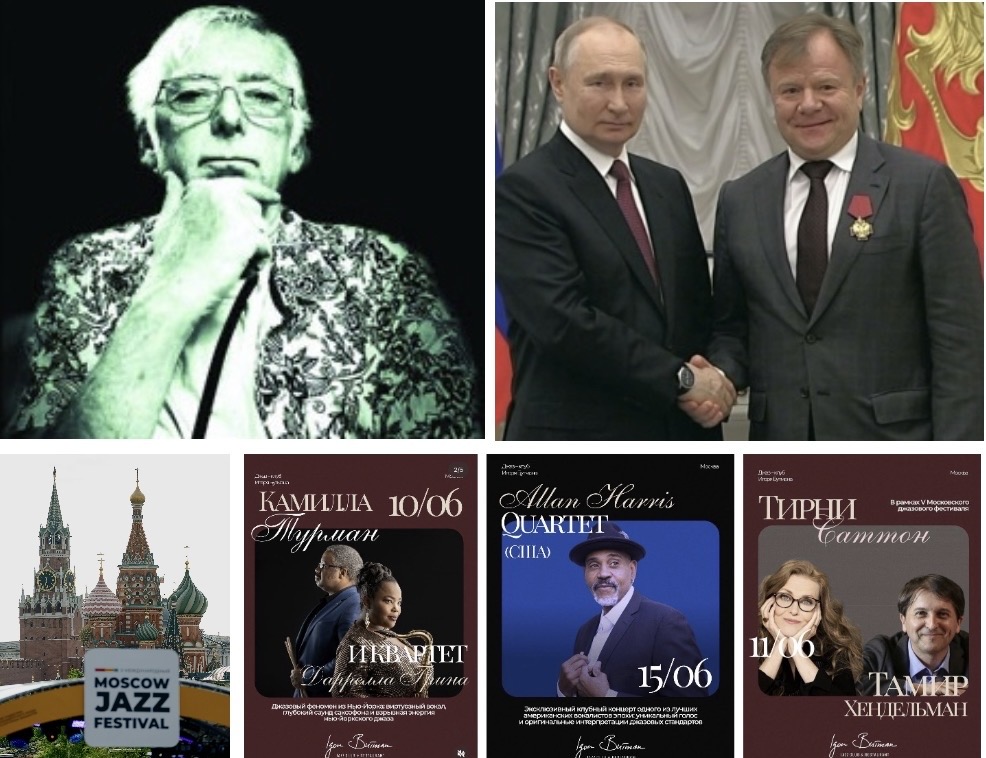
Recently, Arts Against Aggression sent an open letter to more than 160 journalists, art managers, and cultural institutions raising concerns about the participation of U.S. jazz artists in the Moscow Jazz Festival.
So far, we have only received a response from David Haney, who is an American jazz pianist known for his work in avant-garde, experimental, and free jazz, and the publisher of Cadence Magazine – an independent journal of creative improvised music.
We believe it is essential to respond to David publicly to keep this important conversation going.
We are sharing David’s message along with our response, and we hope other musicians, art journalists and cultural critics will participate in the discussion.
David’s message:
“Dear [Arts Against Aggression] while I understand your concern and I’m in 100% support how awful the aggression is against the Ukraine, to punish these musicians by asking that their shows be canceled just plain wrong. It upsets me because artists are not primarily political, but want to share. Our cross cultural ties through music would be punished in such a manner.
I was invited to this festival as a speaker and turned it down but not for political reasons. I would’ve gone with the understanding that musicians play music for people not for governments for politics. It’s better to compare us to sports teams that are being persecuted for representing the governments which they don’t represent. They play sports for the joy of it and for their viewers.
I ask you to reconsider that are being persecuted for representing the governments which they don’t. I ask you to reconsider your attack on these musicians. These are artists worthy of dignity too, and I can’t see how denying them their livelihood and their ability to make a living is going to help anything”.
Response from Arts Against Aggression:
Dear David,
Thank you sincerely for responding and for your long commitment to jazz and the values that make this music matter. You raise points that deserve a real answer.
We understand the instinct to protect artists from political entanglement – and to protect jazz artists’ livelihoods at a moment when arts funding here in the US is at an all-time low. We believe you are coming from a sincerely good place.
But we reject the notion that this is about framing our demands as punishment. U.S. artists performing in Moscow do not represent the U.S. government; the Moscow Jazz Festival explicitly represents the Russian regime. It is organized by Kremlin loyalist Igor Butman, funded by Putin’s presidential foundation, and promoted by Russian state media as a cultural victory for the state. By accepting fees from these same state-backed sources – the very institutions helping sustain a war that has devastated Ukraine’s people and cultural infrastructure – U.S. artists make themselves part of that project. That is why their participation is unacceptable.
We contacted these U.S. artists before the festival, urging them not to participate and explaining that the event is sponsored by the very forces responsible for the devastation of Ukraine’s people and cultural sector. We received no response – not from the artists, their agents, or their management, despite many publicly expressing sympathy for Ukraine. The artists then concealed their Moscow appearances while promoting their other engagements, even blocking public scrutiny. That silence is telling. They knew participation would raise serious ethical and legal questions given that their fees were ultimately funded by sanctioned Russian state-linked entities, including Gazprom and Putin’s Presidential Fund. They knew – and chose to proceed anyway. This was not an act of courage or cultural diplomacy. If it were, there would be no need to hide it. They traveled to Moscow, accepted the money, and in doing so lent credibility to the very regime underwriting the festival. And David – you know this is wrong because you were invited yourself, and you declined.
We are therefore asking U.S. venues to reconsider hosting these artists. This is not a blacklist. It is a call for a targeted, temporary boycott – proportionate, focused, and consistent with a long tradition of boycott movements that have sought to apply pressure where persuasion has failed. The participation of U.S. jazz artists in Kremlin-sponsored festivals projects cultural normalcy for the Russian government, emboldening the very forces causing irreversible harm. That is not punishment. That is accountability.
The U.S. jazz community has already embraced this logic. Artists who withdrew from performances at the Kennedy Center in protest of political developments were widely praised for acting according to their principles. We see no meaningful distinction here. If participation in an institution can carry ethical implications, then participation in Kremlin-directed and sponsored cultural events during Russia’s ongoing destruction of Ukraine’s cultural and civil infrastructure must be subject to the same scrutiny. Accountability cannot be applied selectively.
You wrote that you would have attended the festival as a speaker if assured that musicians play for people, not governments. We respect that sentiment – but that is precisely where the issue is. The Moscow Jazz Festival is funded by Putin’s presidential foundation and organized by Igor Butman, a senior member of United Russia and vocal supporter of the war. In such projects, artists do not need to make political statements. Their presence is the statement. American names on Butman’s poster signal that Russia remains culturally accepted despite its war against Ukraine and destruction of Ukrainian cultural institutions. The participating artists understood this. That is why they promoted their other engagements while concealing their Moscow appearances. Artists who genuinely believe in cultural exchange do not hide it. Duke Ellington did not hide his Soviet tour. Louis Armstrong did not hide his tour of Africa. Ms.Thurman documented her State Department-sponsored tour of Africa extensively on social media. Yet she – and the other U.S. artists – chose not to publicly acknowledge their participation in the 2026 Moscow Jazz Festival.
The sports analogy deserves a direct response: when athletes competed in Hitler’s 1936 Berlin Olympics, the debate was exactly this one. Most spectators were not Nazis – they went for sport, for joy, for competition. And yet their presence was used deliberately to legitimize a regime committing atrocities. History has not been kind to that decision. The parallel is not perfect, but it is not frivolous either.
What further distinguishes this from ordinary cultural exchange is also the law. The Moscow Jazz Festival is funded by Gazprom, currently under U.S. sanctions, and the Presidential Fund for Cultural Initiatives, a Russian state instrumentality. Receipt of compensation connected to these entities is not simply an ethical question – it is a potential legal one. We have filed a formal report with OFAC, the U.S. Treasury’s sanctions enforcement body, which has opened an inquiry.
As this letter is written, Russian strikes have set fire to the Kyiv Pechersk Lavra – a 1,000-year-old UNESCO World Heritage site that belongs to the world. The Russian government (the Moscow Jazz Festival’s executive producer and sponsor) couldn’t care less about this timeless piece of culture. The Ukrainian jazz festivals that once presented Hancock, Shorter, and Corea are laying in rubble. Ukrainian jazz musicians are displaced, and some are dead. Those Russian artists who dared to dissent are imprisoned, sent to war, or in exile.
We owe it to the victims of this war to ask whether U.S. artists performing for a festival directly sponsored and representing the regime responsible for such destruction – and accepting payment from funds from that regime – can truly be considered a politically neutral act. We are not your adversaries, David, nor are we adversaries of the U.S. artists who chose to participate in the Moscow Jazz Festival. Our goal is to provide the press, presenters, and the jazz community with clear facts as we serve our mission of advocating for ethical responsibility in the cultural sphere and to oppose the use of art and culture to legitimize authoritarianism and war.
Lastly, while we trade friendly fire about the meaning of cultural understanding from the comfort of our air-conditioned American offices – and while Mr. Harris trades saccharine choruses of “jazz muzak” with court artist and regime loyalist Butman – the culture and people of Ukraine are burning under real fire.
Perhaps none of us can afford to be impartial or silent
With great respect,
Arts Against Aggression

